Here is a great site for learning how civilizations farmed in Mesopotamia. It is also the website students will need to complete their homework.
Mesopotamia Farming Challenge
Friday, November 13, 2015

Friday, November 6, 2015
Sound Waves
This week we have been learning a lot about sound waves and their properties. There are many resources on the Internet about sound waves including simulations and tutorials, games, websites, and videos. Here are a few:
This an interactive where students can hear the change in pitch and volume as they adjust the frequency and amplitude. Also includes some other concepts that we didn't study in class that the students may find interesting.

This is another interactive that students may enjoy.
A great website with lots of links to many activities can be found here. One of links is to a website with the definitions of parts of a wave. Students can make adjustments on the actual wave. Check it out by clicking here.
Here are two short videos on what a longitudinal wave looks like and what a transverse wave looks like.
Here is a video on the difference between longitudinal waves and transverse waves. The video contains more of the higher level math and formulas related to waves, but the beginning does a nice job of showing the difference between the two types of waves.
This an interactive where students can hear the change in pitch and volume as they adjust the frequency and amplitude. Also includes some other concepts that we didn't study in class that the students may find interesting.
| Click to Run |
This is another interactive that students may enjoy.
A great website with lots of links to many activities can be found here. One of links is to a website with the definitions of parts of a wave. Students can make adjustments on the actual wave. Check it out by clicking here.
Here are two short videos on what a longitudinal wave looks like and what a transverse wave looks like.
Here is a video on the difference between longitudinal waves and transverse waves. The video contains more of the higher level math and formulas related to waves, but the beginning does a nice job of showing the difference between the two types of waves.
Sunday, October 11, 2015
Writing a Science Fair Project Research Paper
The research paper, a favorite among students and parents or a struggle that can take a lot of time to research and write? It is often a struggle, but many students have said this is where they learned the most during their time with the project. They learn about all different types of science topics and how to research, write note cards and outlines, and how to cite information, something that will be useful for the rest of their education. Here are some steps on how to write the actual paper and how to cite sources in text.
Before we begin, it may be useful to review what a background research paper is and is not. This post offers an explanation on just that. That post also explains how outlines can be helpful as well.
Once students have completed an outline, then have students write a paragraph or more on each section of the outline. If the student has struggled to create an outline ask questions and encourage research to find more to put on the outline. Sometimes it is helpful to start writing as the student may discover more concepts to write about as they move forward. Here is a sample outline with a sample paragraph. This piece of the outline and paragraph would be an example of one of the paragraphs in the body of the paper.
Quick background note: This project is on the effect of motor oil on plants. This is an excerpt of an outline.
III. What is motor oil? (Strong topic idea, may be in statement or question form)
A. Definition
B. What is made of?
C. Different types
Now using research that the students have found, begin writing a paragraph expanding on the topics in the outline. Sometimes students may have to complete more research as they write if they find out they do not have information on topics included in the outline. For example, I may have research on the definition and different types of oil, but not on what it is made of. Now the student, instead of struggling with what to search can be specific and search, "what is oil made of?". Please refer to this post on how to do an advanced search in Google.
Paragraph example:
Motor oil is used in many different vehicles like cars and buses that have engines. The oil prevents the pistons from hitting or rubbing up against the engine (Learn About Chemicals Around Your Home). Motor oil comes mostly from something called crude oil. Used motor oil can also have chemicals in it from moving through the engine like magnesium, copper, and zinc (Learn About Chemicals Around Your Home). There are different types of engine oil and they are mostly based on weight, body, and viscosity. Some examples are "5W, 10, 10W, 20, and 20W" (Oil Consideration to Lengthen Engine Life).
The parenthesis show that the sentence or sentences are information that I paraphrased or directly quoted (the one with the quotation marks) from a source, in this case two websites. This would be just one paragraph of a six or more paragraph paper. A paper on this topic might include information on motor oil, the type of plants that would be used in the experiment, and oil pollution.
Before we begin, it may be useful to review what a background research paper is and is not. This post offers an explanation on just that. That post also explains how outlines can be helpful as well.
Once students have completed an outline, then have students write a paragraph or more on each section of the outline. If the student has struggled to create an outline ask questions and encourage research to find more to put on the outline. Sometimes it is helpful to start writing as the student may discover more concepts to write about as they move forward. Here is a sample outline with a sample paragraph. This piece of the outline and paragraph would be an example of one of the paragraphs in the body of the paper.
Quick background note: This project is on the effect of motor oil on plants. This is an excerpt of an outline.
III. What is motor oil? (Strong topic idea, may be in statement or question form)
A. Definition
B. What is made of?
C. Different types
Now using research that the students have found, begin writing a paragraph expanding on the topics in the outline. Sometimes students may have to complete more research as they write if they find out they do not have information on topics included in the outline. For example, I may have research on the definition and different types of oil, but not on what it is made of. Now the student, instead of struggling with what to search can be specific and search, "what is oil made of?". Please refer to this post on how to do an advanced search in Google.
Paragraph example:
Motor oil is used in many different vehicles like cars and buses that have engines. The oil prevents the pistons from hitting or rubbing up against the engine (Learn About Chemicals Around Your Home). Motor oil comes mostly from something called crude oil. Used motor oil can also have chemicals in it from moving through the engine like magnesium, copper, and zinc (Learn About Chemicals Around Your Home). There are different types of engine oil and they are mostly based on weight, body, and viscosity. Some examples are "5W, 10, 10W, 20, and 20W" (Oil Consideration to Lengthen Engine Life).
The parenthesis show that the sentence or sentences are information that I paraphrased or directly quoted (the one with the quotation marks) from a source, in this case two websites. This would be just one paragraph of a six or more paragraph paper. A paper on this topic might include information on motor oil, the type of plants that would be used in the experiment, and oil pollution.
Tuesday, October 6, 2015
Science Fair Research Paper Planning: The use of Outlines
What is the science fair research paper? What is it not?
What it is: a paper written about the important concepts related to the particular science fair idea. It is a third person (no I, me, or we) formal writing that is written using research from resources like books and websites. The paper helps the student learn all the background information about their project so that he/she can write an informed or educated hypothesis and to help the student better understand what happens during the experimental phase of their project. Students will have to cite their research (write where they found their information) within the writing. Students will use parenthetical citation (a fancy way of saying parenthesis) in their paper to cite their sources. More information will be provided to help students do this, but in looking at the example provided in this post you can see the parenthesis.
What it is not: a paper specifically about the person's experiment, including what they are doing, their results and any conclusions.
Here is a sample of a research paper. This does not include a cover page, but will give a good idea of what a research paper may look like.
The question for many is, how do we get from resources like websites, encyclopedias, and books to a 1 1/2 to 2 page research paper. The answer is organized research. Organizing the research into manageable pieces can be very helpful. How is that done?
Several different ways. One way is to use note cards and literally group the note cards with similar information into piles. This is a great visual way to help students "see" their different paragraphs.
One important piece of information to keep in mind is when ever a student finds a piece of information from a resource, the student needs to write down where that information came from. Even if the student changed the words around, that information still needs to be referenced or cited in the paper.
Another helpful way that can be used separately or even better with note cards is an outline. An outline helps the student break their paper down into smaller pieces. A well written outline makes the paper much easier to write. Also when writing the student can use the outline to write one paragraph at a time, making it easier to work on the paper over several days, which helps the paper seem not as intimidating.
Here are two examples of outlines done this year.


What it is: a paper written about the important concepts related to the particular science fair idea. It is a third person (no I, me, or we) formal writing that is written using research from resources like books and websites. The paper helps the student learn all the background information about their project so that he/she can write an informed or educated hypothesis and to help the student better understand what happens during the experimental phase of their project. Students will have to cite their research (write where they found their information) within the writing. Students will use parenthetical citation (a fancy way of saying parenthesis) in their paper to cite their sources. More information will be provided to help students do this, but in looking at the example provided in this post you can see the parenthesis.
What it is not: a paper specifically about the person's experiment, including what they are doing, their results and any conclusions.
Here is a sample of a research paper. This does not include a cover page, but will give a good idea of what a research paper may look like.
The question for many is, how do we get from resources like websites, encyclopedias, and books to a 1 1/2 to 2 page research paper. The answer is organized research. Organizing the research into manageable pieces can be very helpful. How is that done?
Several different ways. One way is to use note cards and literally group the note cards with similar information into piles. This is a great visual way to help students "see" their different paragraphs.
One important piece of information to keep in mind is when ever a student finds a piece of information from a resource, the student needs to write down where that information came from. Even if the student changed the words around, that information still needs to be referenced or cited in the paper.
Another helpful way that can be used separately or even better with note cards is an outline. An outline helps the student break their paper down into smaller pieces. A well written outline makes the paper much easier to write. Also when writing the student can use the outline to write one paragraph at a time, making it easier to work on the paper over several days, which helps the paper seem not as intimidating.
Here are two examples of outlines done this year.


Thursday, October 1, 2015
How to Use Advanced Search in Google
Sometimes students have a hard time sorting through the millions of different websites that are out there on the world wide web. One way to help this is by using the advanced search on Google.
First, open Google. Then click on the settings button pictured here. Then click on advanced search.
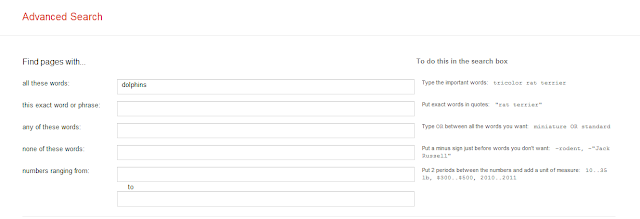
 There are several different options once you have opened the advanced search. Here are a few:
Use the first section to be more specific on the words that you want used or not used in the search:

Fill this box in with the type of URL ending that you are looking for. Information on .edu or .gov websites tends to be more reliable than on .com or .org websites. I have had more success using one ending at a time.


Ever tried to find a power point online? File type is another option. This can limit your search to pdf files, word doc files, power point files, and others including swf or flash files used in multimedia.


First, open Google. Then click on the settings button pictured here. Then click on advanced search.

Use the first section to be more specific on the words that you want used or not used in the search:
Another option that is very helpful is the site or domain box pictured here:
Fill this box in with the type of URL ending that you are looking for. Information on .edu or .gov websites tends to be more reliable than on .com or .org websites. I have had more success using one ending at a time.

Another option is reading level. There are three levels that you can sort your searches by: basic, intermediate, and advanced.

Ever tried to find a power point online? File type is another option. This can limit your search to pdf files, word doc files, power point files, and others including swf or flash files used in multimedia.

The last item on advanced search is related to usage rights. These help you find images and websites that allow you to use them in presentations of your own.

Once you have completed it, just click on the advanced search button

Tuesday, September 22, 2015
More Variable Practice
Here are several online quizzes and practice problems to help practice identifying scientific variables in experiments.
Identifying Independent and Dependent Variables
IXL Identifying Variables
Variables Quiz
Identifying Independent and Dependent Variables
IXL Identifying Variables
Variables Quiz
Identifying Variables in a Science Experiment
Typically in a unit on the scientific method, the biggest hurdle for students is understanding and identifying the different types of variables in a science investigation or experiment.
A variable is anything that could change during an experiment. This post will walk through the different variables. Also be sure to check out a a future post on writing and understanding a hypothesis as that will also help gain a deeper understanding of this concept.
Independent Variable - Also called the manipulated variable. This is what the person doing the experiment changes or what is being tested or the attempted solution to a problem.
Ex. 1 - A person is experimenting with how fast sugar dissolves in different temperatures of water. The person has three cups of water at three different temperatures. The independent variable is the different temperatures of water.
Ex. 2 - A person is testing different stain removers on grass stains. The different stain removers would be the independent variable.
Ex. 3 - You are having trouble waking up in the morning (major problem) so you decide to find a solution. You try different types of music as your wake up song in the morning. The independent variable would be the different types of music.
What do you think? Make sense? Let's move to dependent variable.
Dependent Variable - Also called the responding variable because it responds or depends on the independent variable (rock and roll song with a major drum solo, you wake up and get to school on time, light classical music, sleep till noon.) One of the best ways to identify the dependent variable is to find what is being measured or observed. In other words, you are looking for the results.
Ex. 1 - In example one, a person is experimenting with how fast sugar dissolves in different temperatures of water. The time that sugar dissolves depends on the temperature of the water. The time that the sugar dissolves is also what is being measured. This means that the dependent variable is the time the sugar dissolves.
Ex. 2 - In example two, a person is testing different stain removers on grass stains. How clean the stain is or in other words how much of the grass stain is gone is the dependent variable.
Ex. 3 - In example three, the dependent variable would be the time it takes you to wake up in response to the type of music being played on your alarm clock.
Good review so far? One more variable to go.
Control / Constant / Standardized Variables - Variables that should stay the same in order to have a "fair" experiment.
Ex. 1 - Sugar / water experiment. Control variables would include the type of sugar, the amount of water, the cup used. These are all variables that should be the same in every trial.
Ex. 2 - Stain removers. Control variables would include the type and size of the stain, how long the stain remover sits, and what the stain is put on (like a t-shirt).
Ex. 3 - Alarm Clock. Control variables would include the loudness of the alarm, how long the snooze button is set for, and the time the alarm is set for.
Here is a link to an online quiz on variables. Give it a shot, one of the best ways to learn this is by lots of practice.
A variable is anything that could change during an experiment. This post will walk through the different variables. Also be sure to check out a a future post on writing and understanding a hypothesis as that will also help gain a deeper understanding of this concept.
Independent Variable - Also called the manipulated variable. This is what the person doing the experiment changes or what is being tested or the attempted solution to a problem.
Ex. 1 - A person is experimenting with how fast sugar dissolves in different temperatures of water. The person has three cups of water at three different temperatures. The independent variable is the different temperatures of water.
Ex. 2 - A person is testing different stain removers on grass stains. The different stain removers would be the independent variable.
Ex. 3 - You are having trouble waking up in the morning (major problem) so you decide to find a solution. You try different types of music as your wake up song in the morning. The independent variable would be the different types of music.
What do you think? Make sense? Let's move to dependent variable.
Dependent Variable - Also called the responding variable because it responds or depends on the independent variable (rock and roll song with a major drum solo, you wake up and get to school on time, light classical music, sleep till noon.) One of the best ways to identify the dependent variable is to find what is being measured or observed. In other words, you are looking for the results.
Ex. 1 - In example one, a person is experimenting with how fast sugar dissolves in different temperatures of water. The time that sugar dissolves depends on the temperature of the water. The time that the sugar dissolves is also what is being measured. This means that the dependent variable is the time the sugar dissolves.
Ex. 2 - In example two, a person is testing different stain removers on grass stains. How clean the stain is or in other words how much of the grass stain is gone is the dependent variable.
Ex. 3 - In example three, the dependent variable would be the time it takes you to wake up in response to the type of music being played on your alarm clock.
Good review so far? One more variable to go.
Control / Constant / Standardized Variables - Variables that should stay the same in order to have a "fair" experiment.
Ex. 1 - Sugar / water experiment. Control variables would include the type of sugar, the amount of water, the cup used. These are all variables that should be the same in every trial.
Ex. 2 - Stain removers. Control variables would include the type and size of the stain, how long the stain remover sits, and what the stain is put on (like a t-shirt).
Ex. 3 - Alarm Clock. Control variables would include the loudness of the alarm, how long the snooze button is set for, and the time the alarm is set for.
Here is a link to an online quiz on variables. Give it a shot, one of the best ways to learn this is by lots of practice.
Wednesday, September 16, 2015
Scientific Method: Boat Day Part 1
Here is a video related to our activity in class. Come to class ready
to change or modify your design from today. We will see who's design can hold
the most washers without tipping or sinking. Remember the scientific method is
all about problem solving and critical thinking.
Subscribe to:
Posts (Atom)